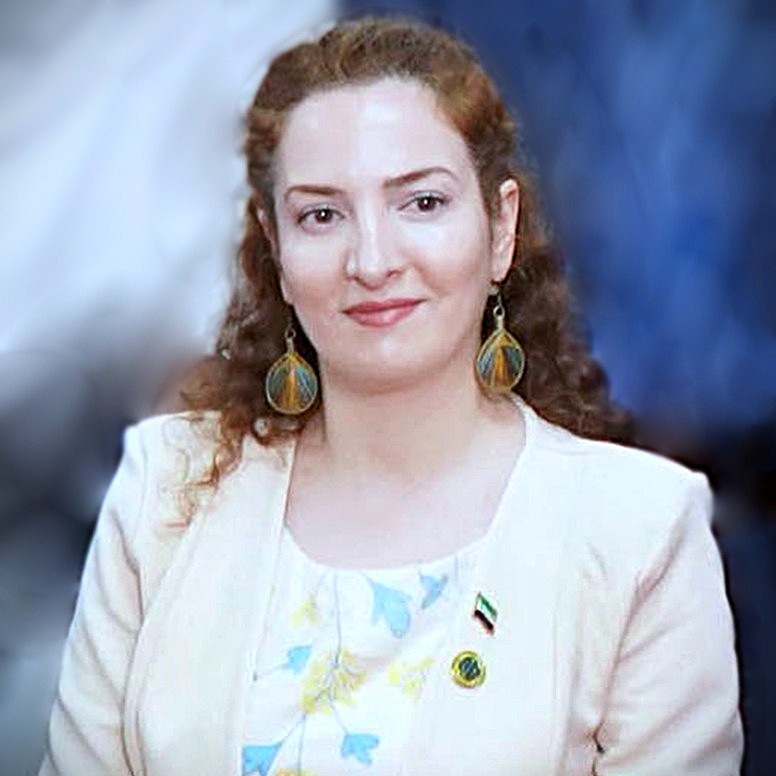
Farah Trablsie brings to TDE Institute a formation that is rare in research: the spatial intelligence of someone schooled at the Faculty of Fine Arts, Damascus University, the fieldwork fluency of a researcher who has spent more than a decade working directly with displaced communities across Turkey and the wider region, and the epistemic proximity of someone who has herself navigated the geography she studies. Currently completing a Master’s in International Relations at the Social Sciences Institute of Istanbul University, her intellectual trajectory has moved from the study of inhabited space to the analysis of space as a political instrument: who is permitted to occupy it, under what conditions, and at what cost.
That trajectory is not incidental. A formation in the fine arts is, at its core, a discipline of spatial and visual legibility — of understanding how space is organised, bounded, authorised, and experienced by those who move through it. Trablsie has transposed this sensibility into migration research with considerable analytical consequence. Where conventional approaches map displacement through legal status or policy category, she reads it spatially: through the distinction between spaces that are sanctioned and spaces that are seized, between the waiting room that the state designs for the migrant and the unofficial geography the migrant carves out for herself. This lens — attentive to the physical and symbolic architectures of inclusion and exclusion — gives her fieldwork a texture that purely legal or sociological frameworks rarely achieve.
Displacement is always, in part, a spatial experience — a negotiation between the spaces you are permitted, the spaces you are denied, and the spaces you quietly make your own.
At TDE Institute, Trablsie is a Research Associate within the Borders, Bodies and Democracy line of inquiry, where her work sits at the intersection of democratic theory, forced displacement, and the spatial politics of protection. Her research interrogates what democratic governance actually means when its subjects are people rendered structurally invisible — refugees suspended in bureaucratic limbo, returnees navigating the collapse of the legal frameworks that once defined their citizenship, children whose access to education, healthcare, and protection depends entirely on the discretionary calculus of states that have not recognised their right to be there.
She brings to these questions both analytical rigour and an intimate fieldwork archive built across years of sustained engagement with Syrian communities in Turkey and the region. The spatial sensibility she carries from her formation at Damascus’s Faculty of Fine Arts — her attentiveness to permitted and denied spaces, to the unofficial geographies people construct when official ones are closed to them — has become a distinctive methodological contribution: a way of reading democratic failure not only in law and policy but in the organisation of physical and social space itself. Where democracy retreats, it leaves a spatial residue — and Trablsie has developed the tools to read it.