The Democracy Experiment Institute

Home  ›  Lines of Inquiry  ›  Borders, Bodies and Democracy

Line of Inquiry

Borders, Bodies and Democracy

The problem is not the border itself, but the political faith that the border is the solution to democracy's problems: a faith that mistakes the symptom for the cure and, in doing so, deepens the democratic crisis it was meant to resolve.

Where Sovereignty Ends and the Body Begins

terminus, ‑i  (m.)  —  Latin: Boundary stone; limit; end point. In Roman religion, the god Terminus was protector of boundaries that could not be moved. Terminus was the end of the journey. International modern migrations know no terminus, know no final borders. Outside borders lead to internal ones, social, economical, political, that no passport or residence permit can conquer.

Borders are not walls. They are decisions, decisions about who belongs, who threatens, who suffers, and who is forced to disappear. Project Terminus investigates how those decisions are made at the edges of democratic states, and what they reveal about the democracies that make them.

The line between a refugee and an economic migrant is drawn by law. The line between a protected person and a deportable one is drawn by procedure. The line between a democratic border and an authoritarian one is drawn, if it is drawn at all, by the willingness of citizens to ask what is being done in their name.

We examine the politics of displacement, the architecture of exclusion, and the democratic accountability gap that grows whenever states transfer their protection obligations to geography, technology, and political economy.

Conceptual Anchor

"Modern border policies do not only exclude those on the outside. They transform those on the inside; compelling every political community to answer the questions it would rather not ask: who belongs, who decides, and at what cost."

Project Terminus

Interlocking investigations into the geographies, bodies, and governance structures through which democratic societies negotiate the meaning of belonging.

01 Research Stream

Refugee Return, Agency, and the Gendered Border
Refugee return — the impossible calculus of return migration

How is national identity transferred in times of displacement and conflict?

"The human rights frameworks designed to protect the most vulnerable are built on assumptions about freedom, choice, and autonomy that displacement systematically dismantles."— Farah Trablsie

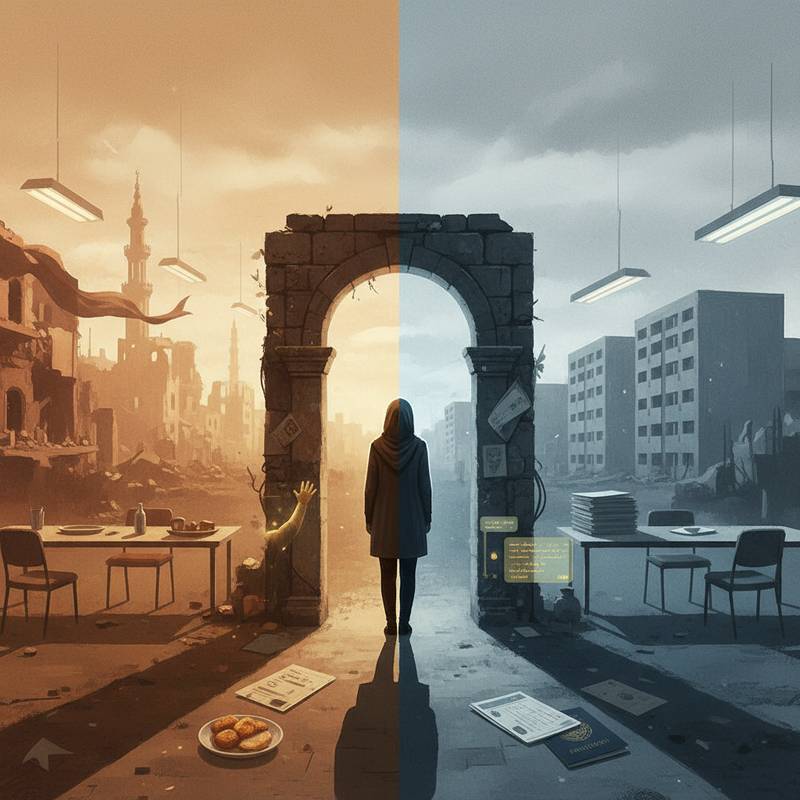
This stream examines how Syrian women navigate the impossible calculus of return migration — where gendered expectations, familial obligations, and cultural preservation collide with the realities of a homeland transformed beyond recognition. Their constrained agency reveals a fundamental tension at the heart of liberal democracies: the human rights frameworks designed to protect the most vulnerable are built on assumptions about freedom, choice, and autonomy that displacement systematically dismantles.
02 Research Stream

Governing the Void: The Architecture of Engineered Rightlessness

Governing the Void — EU waiting room

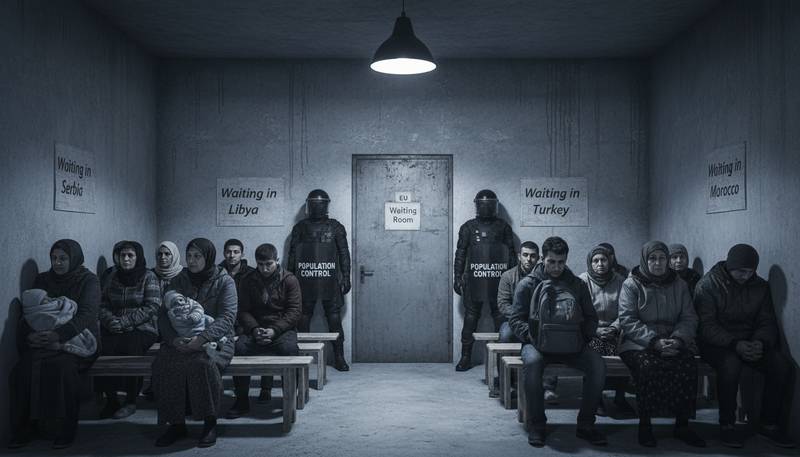
Buffer countries along the outer corridors of liberal democracies — from Serbia to Morocco, Turkey to Mexico — have become de facto waiting rooms where people seeking asylum circulate in enforced suspension. The mechanisms differ; the architecture is the same.

"The duty to protect is systematically deferred, offloaded, and dissolved across jurisdictional boundaries that no single authority is willing to claim."— Maria D. Bermudez

Drawing on multi-site fieldwork (2019–2024), stakeholder interviews and hundreds of participatory hours of observation, this stream argues that the buffer zone void of governance is not a mistake: it is deliberately engineered. Negative sovereignty — political authority organised around population containment rather than protection — is not a European exception. It is a global mode of governance: formal protection frameworks maintained on paper while structural inaccessibility is built into the system by design.

Where institutions refuse to act, populations do not disappear. They build their own governance — digital parallel states that fill the void states have chosen to leave empty.

03 Research Stream

Compassionate Abandonment

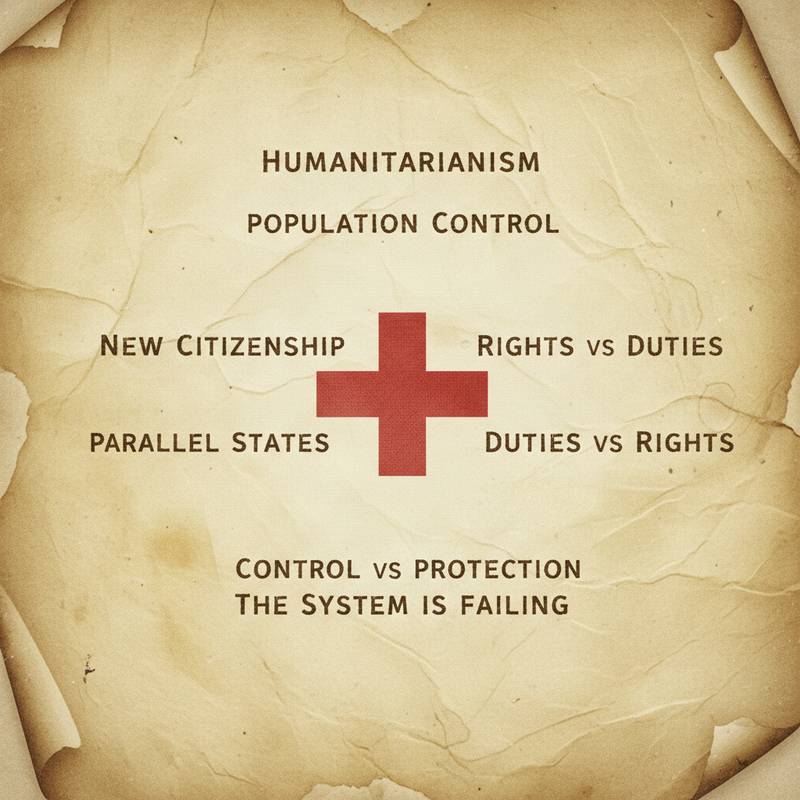
Compassionate Abandonment — the system is failing

Can a democracy claim to uphold human rights while systematically failing those who need protection most?

"The more competently humanitarian actors fill these gaps, the more the state is relieved of pressure to assume its responsibilities. The demand for humanitarian action becomes the alibi for political abandonment."— Gordana V. Đuretić

A new form of governmental rationality is emerging: one that rules not through presence but through structured withdrawal. When states retreat from their protection obligations in EU buffer zones, humanitarian organizations are compelled to fill the void — performing functions that classical governance theory assigns exclusively to the state: the determination and administration of legal status, protection from violence and exploitation, and the assurance of minimum conditions under which rights can be meaningfully exercised. This stream introduces the concept of compassionate abandonment to theorize how NGO service provision creates the illusion of a functioning protection system while political abandonment intensifies beneath it.

By channelling resources through non-governmental actors rather than building durable state protection capacity, the EU's own funding architecture produces self-reinforcing cycles in which compassion subsidises abandonment — trapping humanitarian actors between the ethical imperative to relieve suffering and the recognition that their relief enables the structural reproduction of that suffering.

04 Research Stream

The Human Market: Commodifying Bodies as Migration Policy

The Human Market — commodifying bodies as migration policy

What does it mean when liberal democracies pay others to enforce their border policies at a distance?

"Liberal democracies have learned to buy distance from the people they are unwilling to receive. The real price of that transaction may far exceed what is paid to the states that hold them back."— Maria D. Bermudez

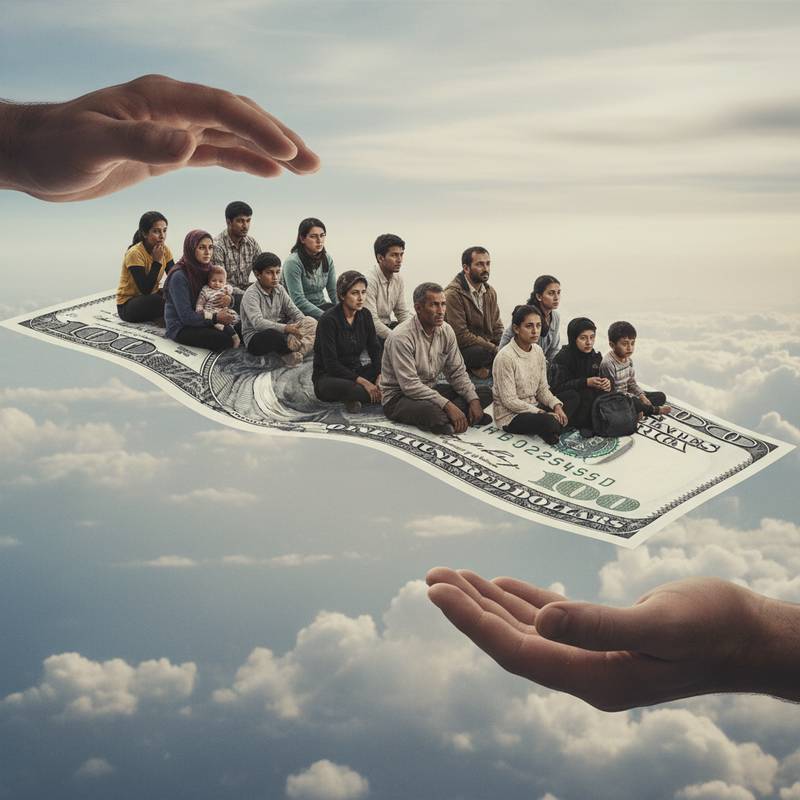
Countries along the EU's edges have become transit states by circumstance and by contract. They manage displaced populations that are present for one reason only: the route to Europe passes through them. That geographic accident has become a political arrangement. These states extract money, trade concessions, and diplomatic cover from democracies unwilling to confront directly what their border policies produce. Forced migrants become the currency of negotiations conducted over their bodies and their futures. European electorates benefit from reduced arrivals without being asked to authorize the means. This stream asks what that arrangement costs. Commodification does not stay at the border. It moves inward, reshaping politics, identity, the boundaries of belonging, and quietly dismantling the values the “buying” democracies claim to uphold.

05 Research Stream

Borders, Bodies, and Democracy

Borders, Bodies and Democracy — the body as data point

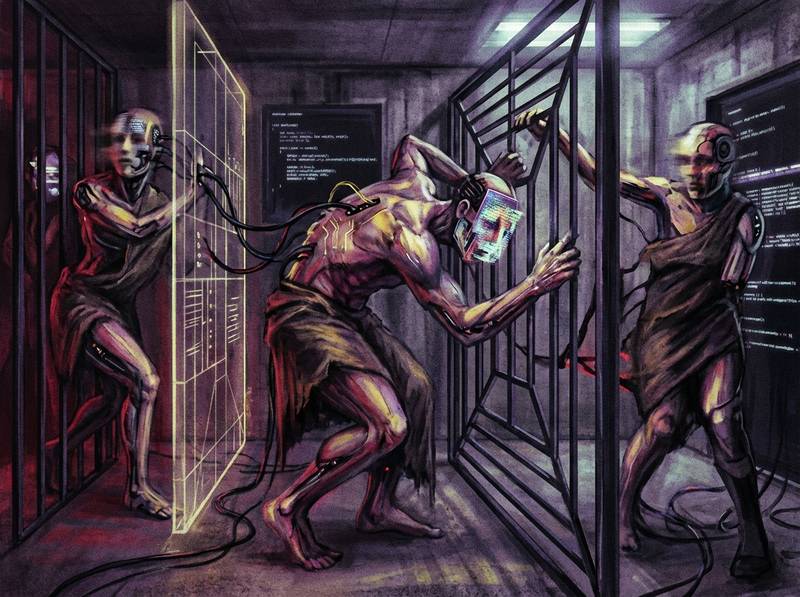
This stream begins from a single structural observation: democratic states have made the body the ultimate credential. Not the person: the body. Fingerprints, irises, facial geometry, gait. What was once a border of territory has become a border of flesh, administered through algorithms and stored in databases whose retention periods outlast most human lives.

"The border is not a quarantine; it is a laboratory, and what is perfected there will eventually redefine the limits of citizenship itself. The suspension of rights at the border is not exceptional: it is emblematic."— Maria D. Bermudez

The logic is not incidental. It is the latest iteration of an enforcement cycle documented since the first systematic border closures: every new barrier generates a new evasion. Physical frontiers produced clandestine routes. Administrative barriers produced document fraud. Biometric borders will produce something more consequential, not the smuggling of bodies across territory, but the enrollment of bodies into sovereign databases. The new smuggler does not drive a van. The new smuggler is a hacker. The contraband is not a person in motion but an identity at rest, inserted into state infrastructure and waiting to be activated.

The border will stop being a line to become a condition written into the body and administered at a distance, present at every airport scanner, every asylum registration, every humanitarian enrollment. The question it poses to liberal democracy is not whether such systems can be made more accurate. It is whether accuracy was ever the point.